



 Full Games List
 Featured Games
 New Games
 Reviews
 Media
Media Images
 Blogs
Blogs Game Updates
 Images Feedback Summary
 Game Design Highlights
 Tutorials
 Articles
 Scripts
 Utilities / Plugins
 Resources
 Engines
 Engine Bulletins
 What is Makerscore?
 Past Events
 Achievements
 Misaos
 Forums
 Post History
 Chat
Chat New to RMN?
 Full Store List
 RMN Music Pack (free)



HOW DO YOU GUYS SET UP BOSS BATTLE AI?
Posts
Pages:
1
 EnderX
 View playlists
 Close
CloseThe 'Elements in Boss Battles' thread got me thinking about boss battles a bit. I'm now wondering, what have you guys set up for boss battle AI?
I'll give you an example of what I mean, taken from my entry in a 2k3 'boss battle' one-week challenge I took part in once. My battle was three phases long - 1st phase, four weak throwaway enemies. Second phase, a pair of stronger enemies. Third phase, the actual boss.
The single PC had a full set of six usable actions - attack, hammer(stat-breaking), tool(elemental damage), First Aid(healing), 'Winter' (a set of miscellaneous moves involving the dog traveling with him), and item.
In the first phase, the enemies had no AI whatsoever; they were simply there for the hero to fight. Attack, defend, one special move - all at the same priority.
The two second-phase enemies had been designed to work with each other; they were intended to heal each other when weak, and getting rid of one meant the other would start throwing more powerful attacks.
It was the third phase, however, where I was trying to allow the AI to shine. The idea was that the actual boss, in addition to trying to tire you out with his minions, had been watching you the whole time, paying attention to what you were doing. He had three basic actions - attack, a lightly-damaging magic attack, and a light healing ability - he could use no matter what. The rest of his bag of tricks depended on how you'd fought his underlings.
Spammed attack against them? Then the boss would use his own anti-attack abilities; you'd take damage while trying to reach him from spikes he scattered on the floor, he'd attempt to pummel you while you were swinging at him, and he'd start using his major healing ability.
Kept attempting to break the enemies' stats with the hammer skills? He'd spam his own stat-raising skills before trying to attack you, and bring them back up again if you did succeed in lowering them.
Tried to use your tools to fry/shock/blast the enemy into oblivion? The boss would raise his defenses against them - and could do so enough that he could end up absorbing the attacks.
Leaned on the First Aid command? The boss would start from the beginning with his most powerful special and magical attacks, hoping to overwhelm you before you could really get started.
Kept pulling out items to replenish yourself? The boss would attempt to knock some of them away from you; the more often you used them, the more likely this was to trigger. (It was in the 'movement pattern' for him four times, each with its own trigger condition set in the battle event page that tallied this.)
The 'Winter' option was the wildcard; with the exception of one skill, using this ability simply added to the likelihood of one of the other options at random. That one skill, however, was a counterattack ability of your own - and if you kept that up long term, or used it often, then the boss would swap out any of his abilities that could trigger the counter, from any attack pattern, for less-powerful actions that would not trigger it.
The catch to all of this, and what was supposed to be the secret to the battle, was this: Once the actual boss showed up, his plans were set in stone. At least in theory, swapping out your previous attack pattern and using another one would allow you to take him on without too much difficulty.
It was a great idea, but the time limit meant I ended up putting it together in a slipshod manner, and balancing was almost nonexistent. I came in last in the contest, and even I can see I deserved it.
Yes, I recognize using one of my own setups probably qualifies as bragging, and I apologize if it is seen that way. I simply can't think of any RM* projects other than my own where I've figured out the mechanics well enough to describe the AI patterns.
So, as the topic asked: Do any of you do anything like that for your games, and if so, what were some of your best or favorite examples?
I'll give you an example of what I mean, taken from my entry in a 2k3 'boss battle' one-week challenge I took part in once. My battle was three phases long - 1st phase, four weak throwaway enemies. Second phase, a pair of stronger enemies. Third phase, the actual boss.
The single PC had a full set of six usable actions - attack, hammer(stat-breaking), tool(elemental damage), First Aid(healing), 'Winter' (a set of miscellaneous moves involving the dog traveling with him), and item.
In the first phase, the enemies had no AI whatsoever; they were simply there for the hero to fight. Attack, defend, one special move - all at the same priority.
The two second-phase enemies had been designed to work with each other; they were intended to heal each other when weak, and getting rid of one meant the other would start throwing more powerful attacks.
It was the third phase, however, where I was trying to allow the AI to shine. The idea was that the actual boss, in addition to trying to tire you out with his minions, had been watching you the whole time, paying attention to what you were doing. He had three basic actions - attack, a lightly-damaging magic attack, and a light healing ability - he could use no matter what. The rest of his bag of tricks depended on how you'd fought his underlings.
Spammed attack against them? Then the boss would use his own anti-attack abilities; you'd take damage while trying to reach him from spikes he scattered on the floor, he'd attempt to pummel you while you were swinging at him, and he'd start using his major healing ability.
Kept attempting to break the enemies' stats with the hammer skills? He'd spam his own stat-raising skills before trying to attack you, and bring them back up again if you did succeed in lowering them.
Tried to use your tools to fry/shock/blast the enemy into oblivion? The boss would raise his defenses against them - and could do so enough that he could end up absorbing the attacks.
Leaned on the First Aid command? The boss would start from the beginning with his most powerful special and magical attacks, hoping to overwhelm you before you could really get started.
Kept pulling out items to replenish yourself? The boss would attempt to knock some of them away from you; the more often you used them, the more likely this was to trigger. (It was in the 'movement pattern' for him four times, each with its own trigger condition set in the battle event page that tallied this.)
The 'Winter' option was the wildcard; with the exception of one skill, using this ability simply added to the likelihood of one of the other options at random. That one skill, however, was a counterattack ability of your own - and if you kept that up long term, or used it often, then the boss would swap out any of his abilities that could trigger the counter, from any attack pattern, for less-powerful actions that would not trigger it.
The catch to all of this, and what was supposed to be the secret to the battle, was this: Once the actual boss showed up, his plans were set in stone. At least in theory, swapping out your previous attack pattern and using another one would allow you to take him on without too much difficulty.
It was a great idea, but the time limit meant I ended up putting it together in a slipshod manner, and balancing was almost nonexistent. I came in last in the contest, and even I can see I deserved it.
Yes, I recognize using one of my own setups probably qualifies as bragging, and I apologize if it is seen that way. I simply can't think of any RM* projects other than my own where I've figured out the mechanics well enough to describe the AI patterns.
So, as the topic asked: Do any of you do anything like that for your games, and if so, what were some of your best or favorite examples?

For my one VX project, I had it so every dungeon boss had a gimmick that could reduce its HP by at least half. For the ice boss, there were three icicles over the ceiling, and the boss would move every other turn. If you hit an icicle with a ranged weapon/magic spell it fell down, and if the boss happened to be under it at the time, he took a huge amount of damage. The player had to wait and choose his targets carefully; if you used an attack all skill, all the icicles fell and you missed out on a ton of damage.
In addition to dungeon bosses, every storyline boss had a gimmick. It wasn't a very serious game, so one boss challenged you to a round of rock, paper, scissors every turn. Whoever won got to attack that turn. Another boss froze all but one person from your party, and who the one person was changed each turn. This meant the player only got to use 1 random party member per turn, so action selection become much more important.
As for my current project, it's an action rpg not made in RM, so I can do a lot more with boss AI.
I hope I helped you think up some new boss AI ideas!
In addition to dungeon bosses, every storyline boss had a gimmick. It wasn't a very serious game, so one boss challenged you to a round of rock, paper, scissors every turn. Whoever won got to attack that turn. Another boss froze all but one person from your party, and who the one person was changed each turn. This meant the player only got to use 1 random party member per turn, so action selection become much more important.
As for my current project, it's an action rpg not made in RM, so I can do a lot more with boss AI.
I hope I helped you think up some new boss AI ideas!

post=108454
one boss challenged you to a round of rock, paper, scissors every turn. Whoever won got to attack that turn.
oh my god that is genius

You have some great ideas, Ramshackin.
My boss battle input: LOTS OF HP AND MULTIPLE BATTLE THEMES PLAYING THROUGHOUT GOGOGO
My boss battle input: LOTS OF HP AND MULTIPLE BATTLE THEMES PLAYING THROUGHOUT GOGOGO

Hmm, the most depth I used to give my boss battles were the same as random battles. a bunch of actions with different priority. It was pretty bad!
I recently came up with the basic idea of giving the opponent an array of 5 skills to be executed in precise order. No random chances or priority. With this very basic idea in mind, a Boss could do something like lower your fire resistance, before attacking with a fire spell. Or curing itself of status effects and restoring HP at the end of it's command chain. By taking out the randomization and chance, I found that a boss becomes more dangerous when it acts with skills in a logical order.
I worked it out so that it went like this.
> Boss Uses Skill 1
> Boss Uses Skill 2 Next Turn
> Boss Uses Skill 3 Next Turn
> Boss Uses Skill 4 Next Turn
> Boss Uses Skill 5 Next Turn
> Boss' Skill Order Resets to Skill 1
This can also get more complicated by say, giving this boss an order to transform before resetting it's skill order back to the first skill in the chain. But since the boss has transformed into another 'monster' with a completely different skill set, the battle situation could change completely, forcing the player to respond differently. And then at the end of this new monster's skill chain, the boss could transform into another form with yet another set of skills. This could go on until it loops back around to the original form.
Its also easier for the player to adapt to, the basic idea at least. The initial 5 turns of the boss can be the 'surprise', and then the following turns after the skill order loops around can be used to properly respond to each action. It's logical, fair, and generally lacking in unfair surprises that stem from 'fake' difficulty.
Annnnnd now I am rambling on, so I will shut up.
I recently came up with the basic idea of giving the opponent an array of 5 skills to be executed in precise order. No random chances or priority. With this very basic idea in mind, a Boss could do something like lower your fire resistance, before attacking with a fire spell. Or curing itself of status effects and restoring HP at the end of it's command chain. By taking out the randomization and chance, I found that a boss becomes more dangerous when it acts with skills in a logical order.
I worked it out so that it went like this.
> Boss Uses Skill 1
> Boss Uses Skill 2 Next Turn
> Boss Uses Skill 3 Next Turn
> Boss Uses Skill 4 Next Turn
> Boss Uses Skill 5 Next Turn
> Boss' Skill Order Resets to Skill 1
This can also get more complicated by say, giving this boss an order to transform before resetting it's skill order back to the first skill in the chain. But since the boss has transformed into another 'monster' with a completely different skill set, the battle situation could change completely, forcing the player to respond differently. And then at the end of this new monster's skill chain, the boss could transform into another form with yet another set of skills. This could go on until it loops back around to the original form.
Its also easier for the player to adapt to, the basic idea at least. The initial 5 turns of the boss can be the 'surprise', and then the following turns after the skill order loops around can be used to properly respond to each action. It's logical, fair, and generally lacking in unfair surprises that stem from 'fake' difficulty.
Annnnnd now I am rambling on, so I will shut up.
I think Skie's idea is a good starting point for people having trouble for boss battles, although using it in a full 20-hour RPG or something might (might!) get old. It'd be cool if, say, some turns were randomized, like if there were Skill 3A and Skill3B. It'd be super-easy in RM*.
I've done something similar where it's 100% certain that a boss will charge up for a power attack, but then it's 50/50 whether they'll use the power attack or charge up again for an even stronger one. Cycles are a good starting point but there are plenty of ways to go with it.

In response to what Skie and Craze wrote, this basic idea, I think has pretty limitless potential, including the potential to not ever get really old. That is, if you mix and match an ordered skill list with a list of skills that are triggered at random or in response to player's actions.
WoW does this beautifully. Each boss battle is original, and it's possible to make extremely challenging encounters even when every move the enemy does is known and can be predicted. When or if I ever get to design boss battle AI, this will be the foundation I build on.
WoW does this beautifully. Each boss battle is original, and it's possible to make extremely challenging encounters even when every move the enemy does is known and can be predicted. When or if I ever get to design boss battle AI, this will be the foundation I build on.
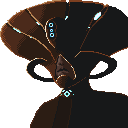
Here's a boss's tactics each round
Round 1:
Raises own magic
Lowers foes' willpower
Remove own debuffs
Remove foes' buffs
Restore own HP
Mute all foes
Stun all foes
Drain all foes' SP
Round 2:
Negates Fire resistances
Negates Air resistances
Negates Earth resistances
Negates Water resistances
Negates Lightning resistances
Negates Ice resistances
Round 3:
Fire nuke
Air nuke
Earth nuke
Water nuke
Lightning nuke
Ice nuke
Repeat Cycle
He'll do four of these in any given round.
Round 1 is biased to the Magic buffs and Willpower debuffs.
Round 2 is biased to the elements that the party resists.
Round 3 is biased to the resistances he negated last turn.
Hopefully this inspires somebody.
Round 1:
Raises own magic
Lowers foes' willpower
Remove own debuffs
Remove foes' buffs
Restore own HP
Mute all foes
Stun all foes
Drain all foes' SP
Round 2:
Negates Fire resistances
Negates Air resistances
Negates Earth resistances
Negates Water resistances
Negates Lightning resistances
Negates Ice resistances
Round 3:
Fire nuke
Air nuke
Earth nuke
Water nuke
Lightning nuke
Ice nuke
Repeat Cycle
He'll do four of these in any given round.
Round 1 is biased to the Magic buffs and Willpower debuffs.
Round 2 is biased to the elements that the party resists.
Round 3 is biased to the resistances he negated last turn.
Hopefully this inspires somebody.
post=108501
LOTS OF HP AND MULTIPLE BATTLE THEMES PLAYING THROUGHOUT GOGOGO
FUCK YOU DESTATI AND YOUR FUCKING TECHNO TOO

post=108546
Skie Fortress snip
I like this! It'd be especially cool if one of the stages is some kind of full-heal and you have to disrupt it somehow. For example you could make it a multi-part boss, and the healing part only comes to life in one turn out of 5, and have to attack him in that turn before he heals the rest of the boss. But if you attack him in a different turn he does a massive counter-attack that fries your whole party. Man, it's a simple idea but there's a lot you could do with it!

One thing I do a lot are silent cues during the battle to indicate something is going to happen soon. Something that is off key and isn't necessarily a part of the players action or what the boss did, and if you don't catch on to it, you're going to get hit hard. Sound effects and animation are the best at this. There could be a room where it tints a certain color over the course of battle. Or a sound that is very faint in the beginning, but gets louder and louder until the boss does a powerful skill.
Also, it's better when the bosses have traits similar to the enemies encountered in the dungeon it's in. This is one reason why I don't really like the boss contest games, or even DE's little dbs entry. You're thrown into battle without any idea of what the pattern or strategy is going to be. The traits are good from a developer standpoint too, because you can start with some small tactics and traits that you're experimenting with, and build them up to their climax. This way, the monsters and dungeon characteristics can basically make the boss for you, rather than creating an all new (and unfamiliar) tactic.
Also, it's better when the bosses have traits similar to the enemies encountered in the dungeon it's in. This is one reason why I don't really like the boss contest games, or even DE's little dbs entry. You're thrown into battle without any idea of what the pattern or strategy is going to be. The traits are good from a developer standpoint too, because you can start with some small tactics and traits that you're experimenting with, and build them up to their climax. This way, the monsters and dungeon characteristics can basically make the boss for you, rather than creating an all new (and unfamiliar) tactic.
post=108858post=108501FUCK YOU DESTATI AND YOUR FUCKING TECHNO TOO
LOTS OF HP AND MULTIPLE BATTLE THEMES PLAYING THROUGHOUT GOGOGO
Whenever somebody complains on the you're-almost-done! theme for Diablocide, I listen to it again.
Anyway, here's how I ACTUALLY made/make Demons for Diablocide. Note that while this is not all AI stuff, the preliminary stuff plays directly into how I set up AI.
1) Set up the monsters for that specific tier of play, make the tower, etc. - the idea is to play through without doing any Rebattle while getting every fight and chest. I then record the average party level.
2) I balance the Demon's six core stats (all except HP, which I'll get to later, and SP which is 2,000) so that they're about equal to the standardized stats of the party's average level + 3. All PC stats in Diablocide are exactly the same; it's actually their role and 1-2 Boosts that make each character unique. Thus, assuming that favorite party members gain a level during the battle, characters with average Accuracy will almost have the normal 95% hit rate against the Demon's Speed and the Demon will have a little above the average 5% crit chance against most PCs' Wisdom.
3) I then choose 2 favored stats for the Demon, or 3 plus a weakened stat. HP and SP are not included in this. SP, again, is a flat 2,000 and HP is 200-250x the average PC Weapon/Magic stat (all stats grow at the same rate, so yeah that works mmmkay?).
4) All Demons (and mini-bosses, for that matter) get a 2,000 SP Charge action that they'll probably use once or twice. They'll never use it until they run out of SP.
3) I then assign a healing gimmick for the Demon. In the current demo(n), this is DESTATI's heal/buff and EQUIS APNEES's absorb attack. There is always a way to combat the gimmick; for DESTATI, you can Curse him, and for EQUIS APNEES you can simply have your Tank defend and lower the damage done (and thus absorption).
4) Then Demon then gets a truly evil/impressive attack. DESTATI can undermine the party, dealing damage to all even after Apnis's slow heal, and EQUIS APNEES sends out twelve Axis bolts.
5) With the core decisions made (healing and keynote attack), the rest of the actions are 4-5 more ways I can think up to devastate the party. There's a weak (hahaha) attack, a few medium ones and then one or two big bangs. At least one action (which might be the healing one) allows the Demon to shore up their weakness, if they have one. This now brings us to the actual AI!
6) Demons in Diablocide have three phases, based on the Demon's health. You know when the phase has shifted for two reasons: one, the music changes, and two, the Demon taunts/yells/whatever. The Demon gets a free buff when switching into phase two, and inflicts sections of the party with some sort of debilitating effect at the start of phase three (example: DESTATI Curses Tanks, lowering incoming healing for the rest of the battle).
7) Finally, I assign weak and medium attacks to the first phase, medium and the occasional big bang to the second phase, and then all-out destruction in the third phase. The evil/impressive attack either occurs alongside the "big bangs" or has a chance of happening every four turns.
Annnnd that's a wrap (rap? tap? rat? wrapp?).

post=109040
Also, it's better when the bosses have traits similar to the enemies encountered in the dungeon it's in. This is one reason why I don't really like the boss contest games, or even DE's little dbs entry. You're thrown into battle without any idea of what the pattern or strategy is going to be. The traits are good from a developer standpoint too, because you can start with some small tactics and traits that you're experimenting with, and build them up to their climax. This way, the monsters and dungeon characteristics can basically make the boss for you, rather than creating an all new (and unfamiliar) tactic.
I'm a strong proponent of this design. You get to learn the ins-and-outs of the enemies in less intense and less risky situations and then apply what you learn in the big battle. Very satisfying.
Pages:
1

